
Ever stared at a weird sliver of wall and thought, “Is this a design crime scene… or just a lost cause?” Been there. In this guide, I’m diving into the glorious (and sometimes hilarious) challenge of decorating small spaces with affordable art prints, because your walls deserve more than existential dread. From leaning prints on shelves like they casually woke up fabulous, to making that awkward nook the star of the room, I’ll show you how to turn “where do I even hang this?” into “wow, that looks intentional!” Whether you’re working with a shoebox flat or just battling one stubborn wall, there’s a stylish, wallet-friendly fix waiting. Let’s make those tight corners shine, one print at a time.
I know you’ve tried looking at a tiny wall next to a window or a strange corner by the stairs and thought, what on earth do I do with that?
I know I have.
In my own flat, there’s this tiny sliver of wall between the kitchen and the lounge. For ages, I left it blank. Everything I tried there just looked… wrong.
Until one day I popped a small, punchy abstract print into a pale wood frame and hung it low, just above eye level when I’m sitting on the sofa.
It completely changed how that whole little space felt. Finally, a little corner with its own personality. It had warmth. Energy. Intention.
That’s the thing with small spaces. It doesn’t take much to transform them. But it does take the right touch.
In small or odd-shaped spots, it’s not about filling the space. It’s about creating focus.
The key is not to crowd it and let the art print breathe. Choose one or two meaningful pieces rather than trying to fill every square inch.
You’ll be surprised how even the tiniest piece can become the soul of a room. Sometimes it’s that sliver of a wall near the door or that narrow space above the radiator that ends up stealing the show.
If you live in a flat, a cosy cottage, or just have that one awkward wall that never seems to work, this one’s for you. Small spaces can be tricky when it comes to decorating, especially with art. But done right, the right piece can actually open up a room and make it feel more alive.
1. Go Vertical
In tight spots, tall and narrow art is your best friend. It draws the eye upward and instantly makes the ceiling feel higher. A long botanical print, a slim skyline, or even a stylised portrait can give the illusion of added height.

In my hallway, I hung long vertical frames of my botanical prints. It added height, calm, and a soft colour pop all in one move.
When you’re working with small rooms, overly detailed pieces can feel a bit chaotic. Instead, go for artwork with bold shapes, limited colour palettes, or graphic appeal.
Think of it like this: in a small space, your art is speaking in a whisper. Keep the message clear and strong.
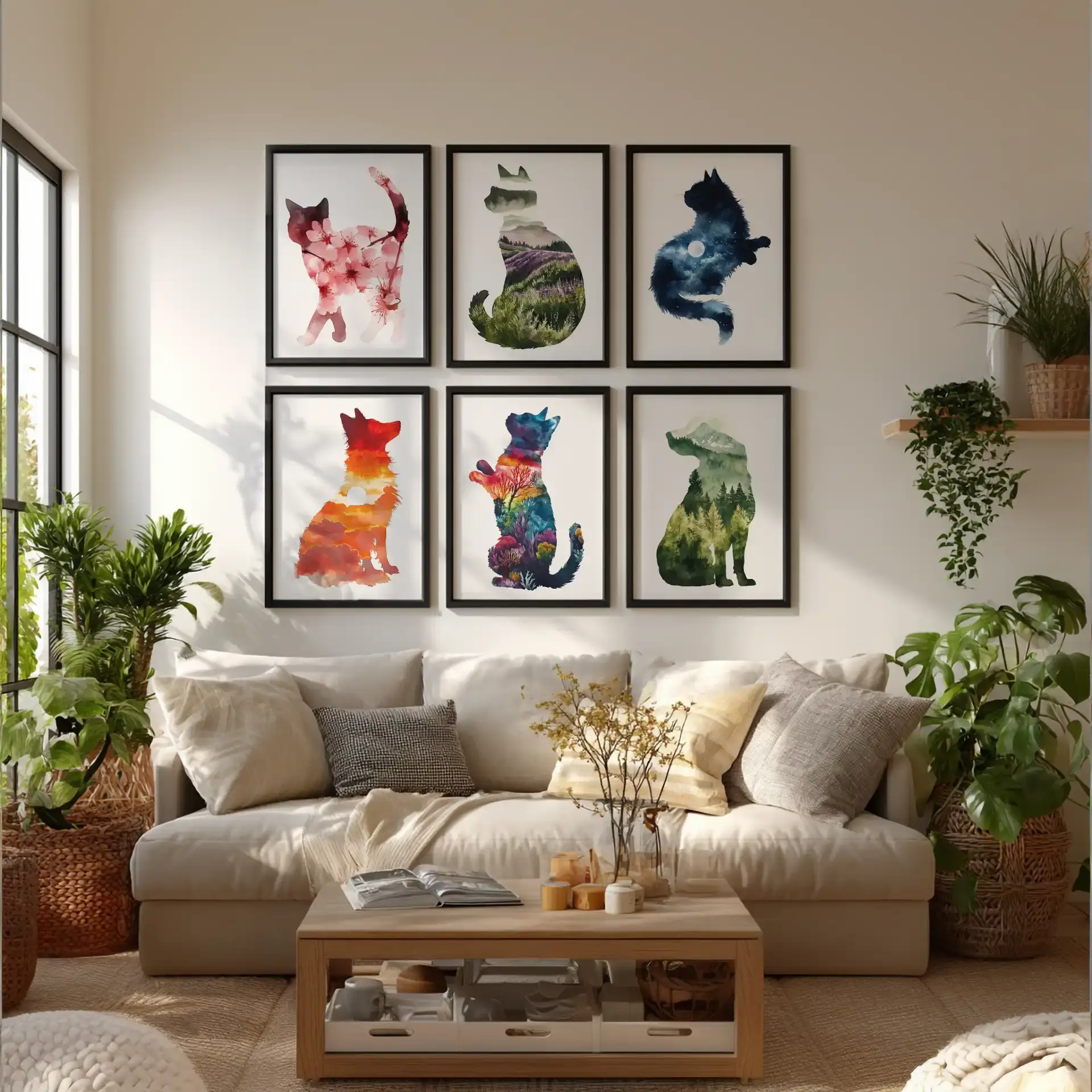
3. Try a Gallery Wall with Mini Prints
One large canvas might be too much for a small wall, but a few petite prints grouped together can feel dynamic and personal.
Stick to a theme, like black and white abstracts, or coastal sketches; and use matching frames or consistent colours to pull it all together. Grid layouts work great, or try a casual cluster.
Gallery walls also allow you to tell a story. Maybe one print is from your favourite artist, another reminds you of a holiday, and one was a gift from someone special. That mix of meaning gives the wall a voice.
4. Lean Art on Shelves
Don’t underestimate the power of a good shelf! Floating shelves, picture ledges, even your bookcase make great stages for smaller artworks.
Mix prints with books, plants, candles or ceramics for an easy, lived-in look. And the best part? You can swap out the art whenever the mood hits.
This is a trick I use a lot. Especially when I can’t commit to a nail in the wall.

5. Use Mirrors and Art Together
Light is precious in small rooms. Hang a mirror beside your art to bounce light around and make the space feel bigger.
Even better, pair your art and mirror to complement each other. A circular mirror next to a square print can create contrast. Or try two rectangular pieces side-by-side for symmetry.
It doesn’t have to be large. Even a small mirror adds depth.
6. Frame in White or Light Wood
Dark frames can feel too heavy in close quarters. But pale wood, white, or even gold-toned frames can lift the piece and help it blend beautifully into its surroundings.
Think of the frame as part of the atmosphere. Light tones give air, while dark tones give drama. In small spaces, it’s usually the air you want.
One of my best-selling pieces, Turtle’s Symphony, looks incredible in white frame. It brings out the earthy greens and blues and fits into just about any room.

7. Match Your Palette
Don’t fight your space, work with it. Look at the colours already in your room and pick prints that echo or contrast them in a gentle way.
If you have warm tones in your cushions or throws, try artwork that brings those same tones into play. It creates a sense of unity and calm.
Art doesn’t have to match perfectly, but it should speak the same language as the rest of your space.
8. Hang It Lower Than Usual
Most of us hang art too high. Especially in small spaces, bringing the artwork lower can make the room feel grounded and more inviting.
Try hanging a piece so it’s at eye level when sitting down, not standing. It makes the space feel more human, more connected. When you and your guests are relaxing, you want them to see the art at eye level, not through looking up!
This is especially great above beds, sofas, or sideboards.
9. Try Diptychs or Triptychs
Diptychs (two-part artworks) and triptychs (three-part ones) are brilliant for stretching art across a longer wall without it feeling heavy.
They can make a space feel intentional and thoughtfully designed.Choose one image split into panels or a collection of related prints that belong together.
This also allows for more flexibility! You can space the panels wider or tighter depending on your wall.

10. Pick Art That Creates Calm
Small spaces already feel intense. Avoid overly busy, dramatic pieces unless that’s the look you’re going for.
Instead, choose calming artworks. Think soft blues, earthy greens, flowing lines, or gentle landscapes.
These help the space feel open, even if the room is tight.
I often return to watercolour for this reason. Its soft, layered textures and gentle hues are perfect for creating calm. In my opinion, they are the best prints that could go with any crowd.

Lighting Matters
If you can, add a picture light above your artwork. It draws attention to the piece and makes it feel more intentional. Table lamps or wall sconces near the art also work wonders.
Even fairy lights or LED strips behind a shelf of artwork can make a cosy, magical difference.
Texture is Your Friend
Art doesn’t have to mean a flat print. Consider textured pieces like canvas wraps, hand-torn edges, or even textile wall hangings. They add depth without overwhelming the space.
Keep the Energy Flowing
Don’t feel like every wall has to have something on it. Sometimes, the best thing you can do is leave a little breathing room.
Let the art lead the room, not crowd it.
Ever run out of wall space but still want to showcase art? Whether walls are fully covered or you’re in a customizable rental, you don’t need to sacrifice visual appeal. This post highlights creative strategies to display art even when walls are maxed out; so every room feels curated and personal.
Lean Art on Floors, Shelves & Furniture
When walls are packed, lean artwork on horizontal surfaces. Floor-leaned frames placed behind a sofa or beside furniture create relaxed vignettes. Stack prints or canvases on shelves, mantels, dressers, or consoles: layering adds texture and depth. You can also keep a balanced tabletop or shelf scene by leaning smaller frames against larger ones and integrating vases, stacks of books, or greenery
Create Freestanding Installations with Easels
Use a decorative floor easel to display a larger piece as a sculptural accent! This solution works great for lofty ceilings, living rooms, or bedrooms … especially when wall mounts aren’t an option

Use Top Surfaces & Mantels
Show off art on dressers, sideboards, or fireplace mantels by leaning or layering pieces along surfaces. A mirror or print atop a console feels intentional and grounded when paired with decour items.
For small bathrooms and toilets without walls left, place framed prints atop floating shelves or ledges above sinks or toilets. Take advantage of furniture surfaces rather than walls.
Utilize Floors & Corners
Place art in corners leaning up or tucked against another piece. This works especially well with larger formats like vintage posters or oversized canvases. Ideally, visual weight from corners adds balance when wall inventory is maxed.

Display Art on Bookcases
Make use of vertical cabinetry! Lean framed pieces on open shelves, alternating art with books and decor to keep visual balance (one-third rule: one part decor, one part books, one part art). Another alternative is to hang small art or place a statement print on the front face of a shelf or built-in for a layered gallery effect

Think Outside the Frame
Designer Leanne Ford and others encourage intentional off‑center or unexpected locations like hanging in closets or combining small prints above or in front of others, which embraces carefully curated placements away from standard walls
With intentional styling and creativity, you can keep art at the heart of your décor even when walls are maxed out. Lean, layer, hang unconventionally, and rotate. This will make your surfaces become living galleries. Let every shelf, top surface, corner, or even cabinet door speak of your personality and style.
Q: What kind of wall art is best for small rooms?
A: Stick to vertical or oversized statement pieces, and use mirrors or nature-inspired elements to enhance space perception.
Q: How high should wall art be hung?
A: Aim for 57–60 inches from the floor to the center of the artwork, or eye level for most people.
Q: Can I have a gallery wall in a small apartment?
A: Absolutely! Keep it tight and cohesive, and limit the number of pieces and maintain consistent spacing.
Q: What’s renter-friendly wall decor aside from frames?
A: Use removable wallpaper, command strips, wall decals, and art ledges to avoid permanent damage.
Q: How often should I change wall decors?
A: Ideally every season or whenever you want to refresh the room’s mood or palette.
Just because your room is small doesn’t mean your art’s impact has to be. A little thought goes a long way! Choose pieces that speak to you. Think about how they interact with the space. And most of all, have fun with it.
Even the smallest wall can become a canvas for big creativity. Whether you go bold with an oversized piece or play with layers on a picture ledge, wall art is the fastest way to infuse your small space with personality and style. Choose one of these top 10 ideas, or combine several and transform your walls into works of art that speak volumes in tight quarters.
Let your walls whisper, speak, or shout your story! Just make sure they do it with intention and impact. At the end of the day, it’s your home, your gallery, and your wall. Take a look at our most popular art selection to find the best budget-friendly art prints for your wall.
Happy decorating!


